Battery recycling: how it works
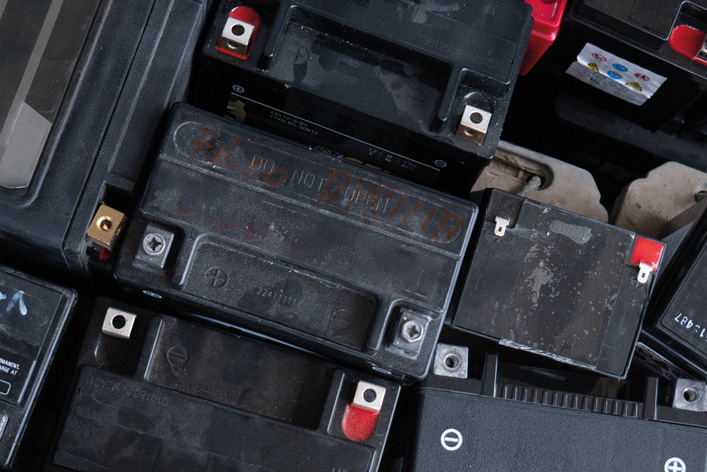

Is your car battery weakening, is your motorcycle battery giving up the ghost or is the battery in your motorhome getting on in years? Then it's time for a new one! But what happens to the old battery? Throw it away? Absolutely not! We explain why recycling batteries is so important, how you can easily make your contribution to sustainability and even save money in the process!

Batteries have become an integral part of our everyday lives. They supply our cars, motorcycles, motorhomes and countless electronic devices with electricity. But many people don't know this: Batteries, especially the common lead-acid batteries, contain valuable raw materials that should not simply end up in the bin.

If batteries are not disposed of properly, the substances they contain can enter the environment and contaminate the soil and groundwater. Lead, for example, is a toxic heavy metal that can accumulate in the body and cause health problems.

Have you bought a new car battery? Great! Then you can simply return your old battery to the dealer or garage. Most dealers who sell car batteries are legally obliged to take back old batteries - no matter where you bought them!
When you buy a new car battery, you usually pay a deposit of 7.50 euros. You will get this amount back if you dispose of your old battery properly.
When transporting the old battery, make sure that it is securely packed and that no acid can leak out. It is best to transport it in the trunk in a special battery container or in the original packaging.

You can also return your old motorcycle battery to your dealer, garage or recycling center.

Disposing of motorhome batteries works in exactly the same way as with car or motorcycle batteries. As these are often larger and heavier batteries, correct handling during transportation is particularly important. Make sure that the battery is secure and cannot fall over.

Would you like to order your new battery conveniently online? No problem! Simply take your old battery to a disposal point (e.g. recycling center) beforehand and ask for confirmation that it has been handed in. You can then send this confirmation to the online retailer, who will usually refund the deposit. Some online retailers also offer special deposit vouchers that you receive when you buy a new battery and can use when you return the old battery.

What actually happens to your old battery after you have handed it in? It is transported to a specialized recycling company where it is broken down into its individual parts.

Lithium-ion batteries, such as those used in electric cars, smartphones and laptops, pose a particular challenge for recycling. Recovering valuable raw materials such as lithium, cobalt and nickel is more complex than with lead-acid batteries. However, progress is being made here too and recycling processes are constantly being developed.
